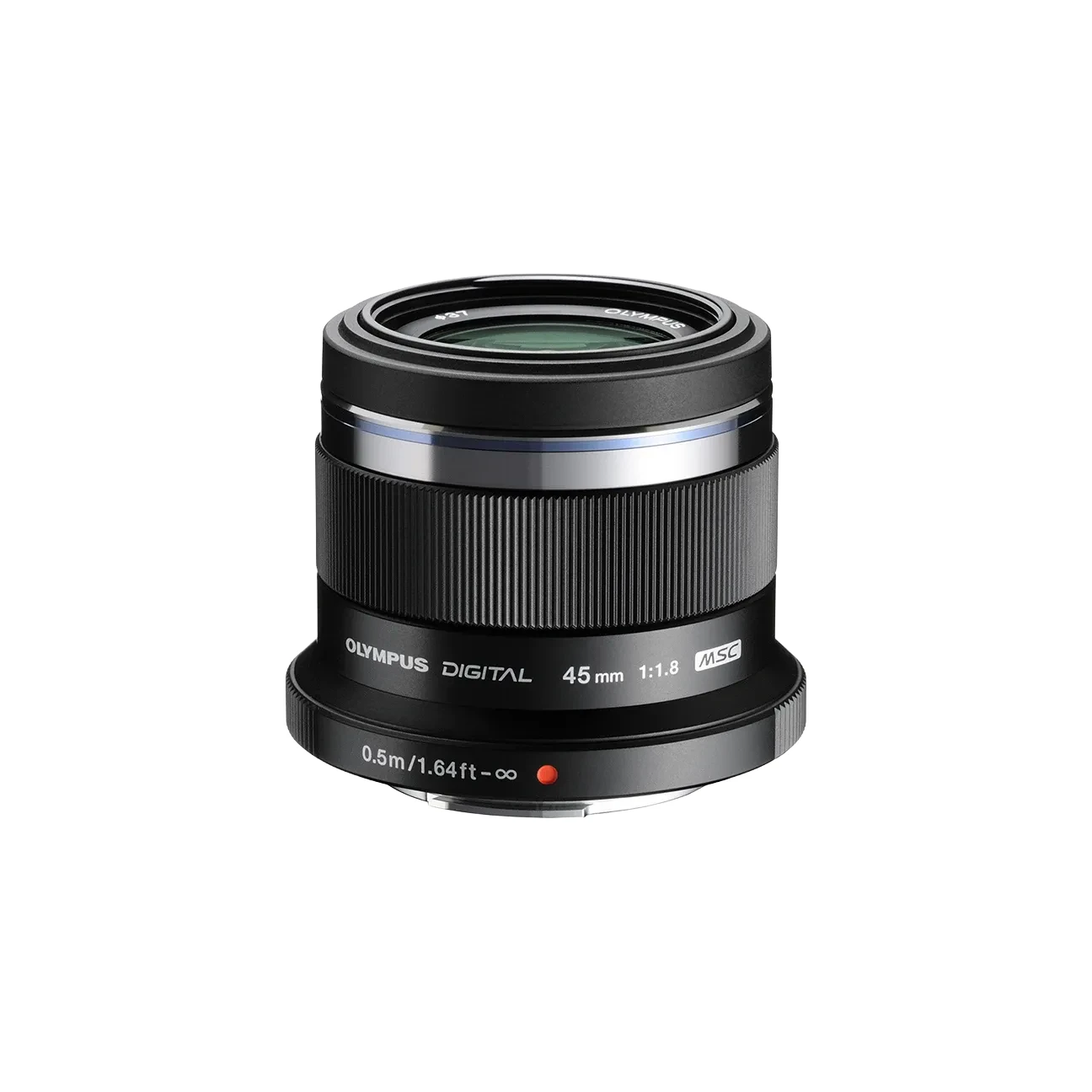
 Olympus M.Zuiko Digital 45 mm f/1.8
§ 03 Head to head
Olympus M.Zuiko Digital 45 mm f/1.8 vs Panasonic G 42.5 mm f/1.7 ASPH. POWER O.I.S.
Olympus 45mm f/1.8 has a longer reach. Panasonic 42.5mm f/1.7 is 0.2 stops brighter maximum aperture.
Both lenses are made for the Micro Four Thirds mount: the Olympus M.Zuiko Digital 45 mm f/1.8 is a 45mm f/1.8 prime, and the Panasonic G 42.5 mm f/1.7 ASPH. POWER O.I.S. is a 42.5mm f/1.7 prime. On paper the Panasonic G 42.5 mm f/1.7 ASPH. POWER O.I.S. comes out ahead, 5 advantages to 3, but which one suits you depends on what you shoot.
Olympus M.Zuiko Digital 45 mm f/1.8 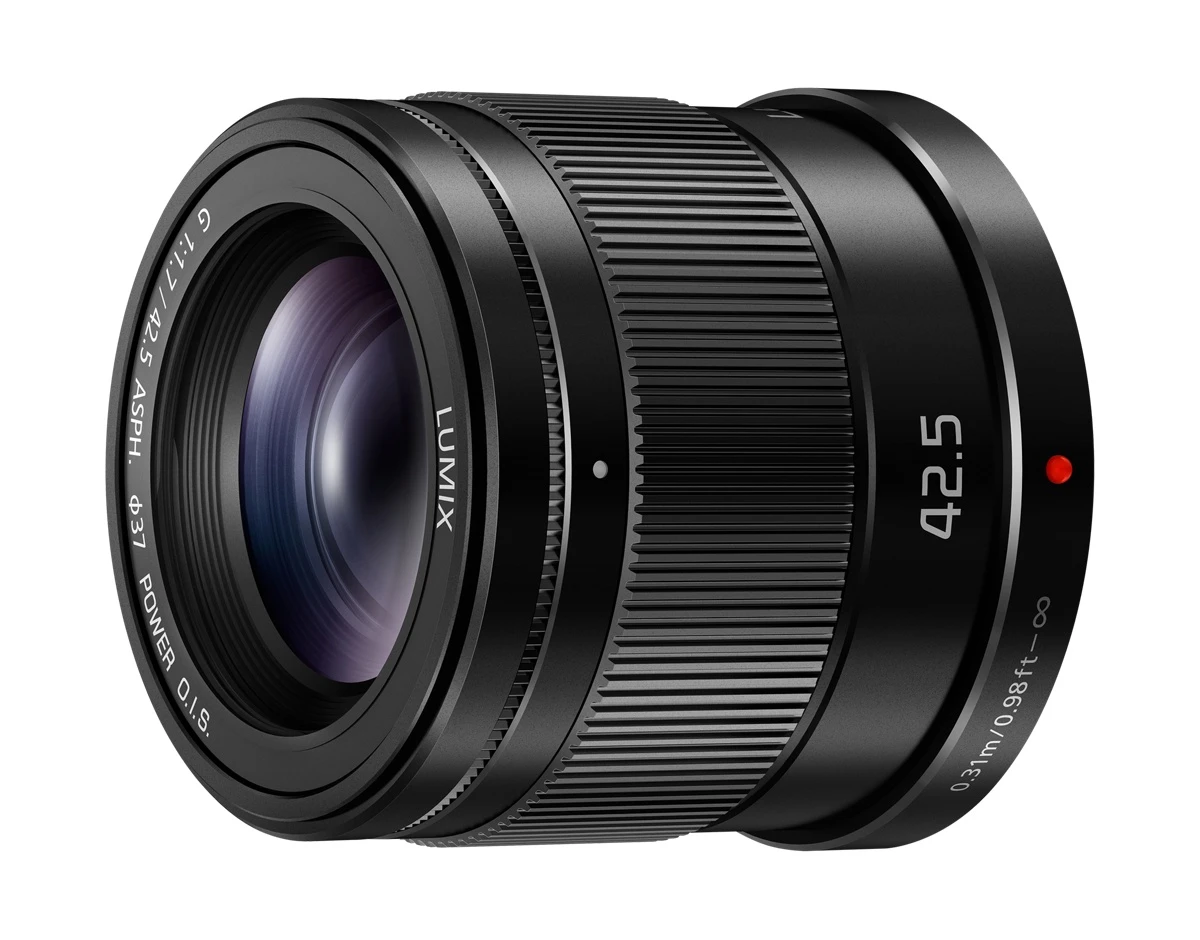 Panasonic G 42.5 mm f/1.7 ASPH. POWER O.I.S.
01
Key differences
Why is the Olympus M.Zuiko Digital 45 mm f/1.8 better than the Panasonic G 42.5 mm f/1.7 ASPH. POWER O.I.S.?
- Longer reach (45mm vs 42.5mm)
- 14 g lighter (116 g vs 130 g)
- 4 mm shorter (46 mm vs 50 mm long)
Why is the Panasonic G 42.5 mm f/1.7 ASPH. POWER O.I.S. better than the Olympus M.Zuiko Digital 45 mm f/1.8?
- 0.2 stops brighter maximum aperture (f/1.7 vs f/1.8)
- Wider field of view (42.5mm vs 45mm)
- Focuses 19 cm closer (0.31 m vs 0.5 m)
- Has optical image stabilization
- Newer design (2015 vs 2011)
02
Which should you buy?
- low-light For low-light shooting, the Panasonic G 42.5 mm f/1.7 ASPH. POWER O.I.S. has the edge: its f/1.7 aperture gathers more light than f/1.8.
03
Specification
| Specification | Olympus M.Zuiko Digital 45 mm f/1.8 | Panasonic G 42.5 mm f/1.7 ASPH. POWER O.I.S. |
|---|---|---|
| Focal length | 45mm | 42.5mm |
| Maximum aperture | f/1.8 | f/1.7 ◆ |
| Minimum aperture | f/22 | f/22 |
| Lens type | Prime lens | Prime lens |
| Format | Micro Four Thirds | Micro Four Thirds |
| Weight | 116 g (4.09 oz) ◆ | 130 g (4.59 oz) |
| Dimensions | 56 x 46 mm | 55 x 50 mm |
| Minimum focusing distance | 0.5 m (19.69 inches) | 0.31 m (12.20 inches) ◆ |
| Image stabilization | No | Yes ◆ |
| Weather sealing | No | No |
| Aperture ring | No | No |
| Aperture blades | 7 | 7 |
| Optical construction | 9 elements / 8 groups | 10 elements / 8 groups |
| Filter size | 37 mm | 37 mm |
| Lens mount | Micro Four Thirds | Micro Four Thirds |
| Released | 2011 | 2015 |
| Price | — | $499.99 list price |
04
Size
- A · Olympus
- B · Panasonic
- 46 × 56 mm
- 50 × 55 mm
The Panasonic G 42.5 mm f/1.7 ASPH. POWER O.I.S. is 4 mm longer and 14 g heavier than the Olympus M.Zuiko Digital 45 mm f/1.8.
05
Sample frames
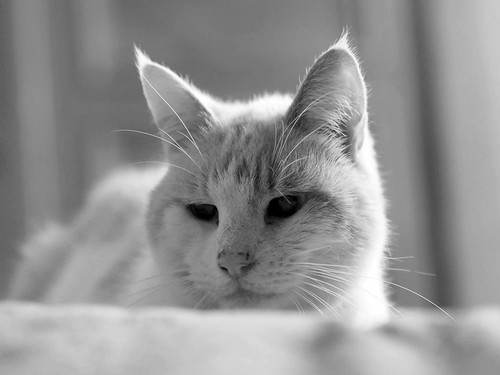
Olympus M.Zuiko Digital 45 mm f/1.8



06
Video reviews

07
Questions
- Which lens has the brighter aperture, the Olympus M.Zuiko Digital 45 mm f/1.8 or the Panasonic G 42.5 mm f/1.7 ASPH. POWER O.I.S.?
- The Panasonic G 42.5 mm f/1.7 ASPH. POWER O.I.S. opens to f/1.7, against f/1.8 on the Olympus M.Zuiko Digital 45 mm f/1.8, 0.2 stops brighter.
- Which is lighter, the Olympus M.Zuiko Digital 45 mm f/1.8 or the Panasonic G 42.5 mm f/1.7 ASPH. POWER O.I.S.?
- The Olympus M.Zuiko Digital 45 mm f/1.8 weighs 116 g, 14 g less than the Panasonic G 42.5 mm f/1.7 ASPH. POWER O.I.S. (130 g).
- Which focuses closer, the Olympus M.Zuiko Digital 45 mm f/1.8 or the Panasonic G 42.5 mm f/1.7 ASPH. POWER O.I.S.?
- The Panasonic G 42.5 mm f/1.7 ASPH. POWER O.I.S. focuses down to 0.31 m, against 0.5 m for the Olympus M.Zuiko Digital 45 mm f/1.8.
- Do the Olympus M.Zuiko Digital 45 mm f/1.8 and the Panasonic G 42.5 mm f/1.7 ASPH. POWER O.I.S. have image stabilization?
- Only the Panasonic G 42.5 mm f/1.7 ASPH. POWER O.I.S. has optical image stabilization.
- Is the Olympus M.Zuiko Digital 45 mm f/1.8 or the Panasonic G 42.5 mm f/1.7 ASPH. POWER O.I.S. better for low-light shooting?
- For low-light shooting, the Panasonic G 42.5 mm f/1.7 ASPH. POWER O.I.S. has the edge: its f/1.7 aperture gathers more light than f/1.8.
08